How the Internet Actually Works (Explained Simply)
Kolton Xiong
July 24, 2026
Most of us use the internet every day to browse websites, watch videos, send messages, and shop online. Yet few people stop to think about what actually happens after they click a link or press “Send.” It can seem like information magically appears on your screen in seconds.
In reality, the internet is a massive global network of connected computers that communicate with one another using shared rules. While the technology behind it is incredibly sophisticated, the basic idea is surprisingly simple.
The internet is a giant network
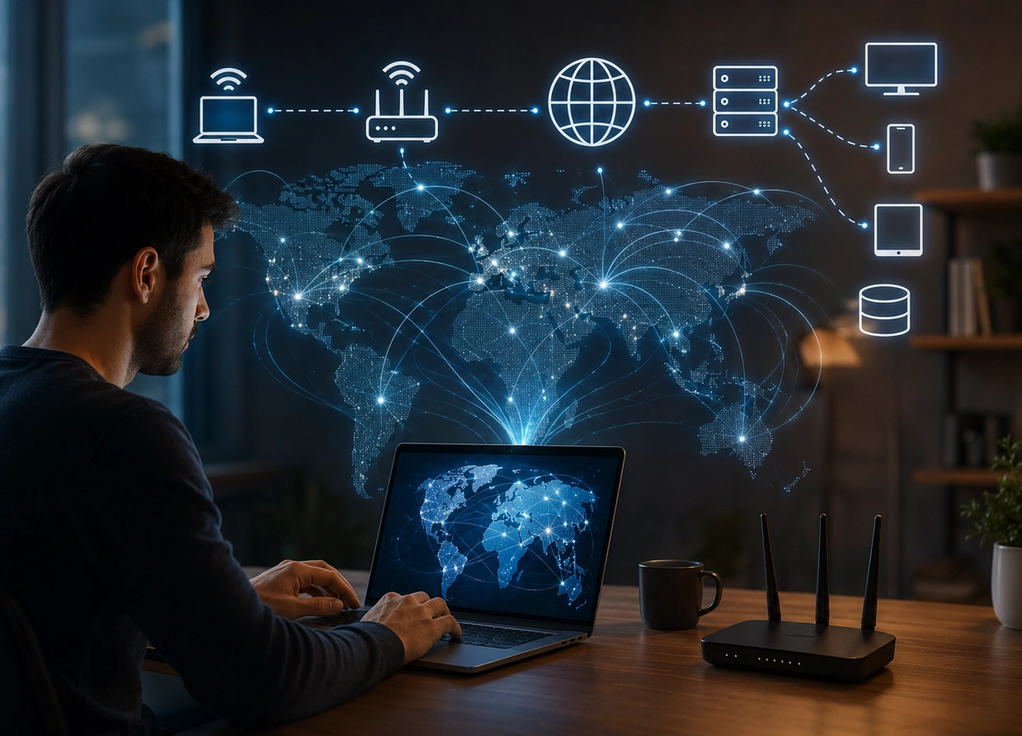
Think of the internet as an enormous network of roads connecting billions of devices around the world.
Instead of cars traveling on highways, small pieces of digital information travel between computers, smartphones, tablets, servers, and other connected devices. These devices communicate continuously, sending and receiving data whenever you load a webpage, stream a movie, or send an email.
The internet itself isn’t one single machine. It’s a worldwide system made up of millions of smaller networks that work together.
This cooperation is what allows information to move almost instantly across the globe.
What happens when you visit a website?
When you type a website address into your browser, several things happen in just a few seconds.
First, your device asks a system called the Domain Name System (DNS) where that website is located. DNS works like the internet’s phone book, translating easy-to-remember website names into numerical addresses that computers understand.
Once your device knows where the website is, it sends a request to the server hosting that site. The server responds by sending back the files needed to display the webpage, including text, images, videos, and formatting.
Your browser then assembles those pieces into the page you see on your screen.
Information travels in small pieces
The internet doesn’t usually send an entire webpage or video all at once.
Instead, information is divided into tiny units called data packets. Each packet travels independently across the network and may even take a different route depending on traffic conditions.
When all the packets arrive at your device, they’re reassembled in the correct order, allowing you to view the complete webpage, video, or message.
This system makes the internet more efficient and reliable because information can continue flowing even if one path becomes unavailable.
How your device connects to the internet
Your smartphone, laptop, or computer connects to the internet through an Internet Service Provider (ISP).
The connection may come through fiber-optic cables, cable networks, mobile data, satellite systems, or other technologies. ISPs act as the bridge between your device and the wider internet, allowing your requests to reach websites and online services.
Wi-Fi simply connects your device to your local router. The router then uses your internet connection to communicate with the rest of the world.
Without an ISP, your device can connect to nearby devices but cannot access the global internet.
Why the internet feels so fast
The speed of today’s internet is the result of powerful infrastructure built over decades.
Much of the world’s internet traffic travels through fiber-optic cables, including thousands of miles of underwater cables connecting continents. These cables transmit enormous amounts of data using pulses of light, allowing information to travel incredibly quickly across long distances.
At the same time, data centers, content delivery networks, and modern networking equipment help reduce delays by storing popular content closer to users.
That’s why websites and videos often load in just a few seconds.
Keeping information secure
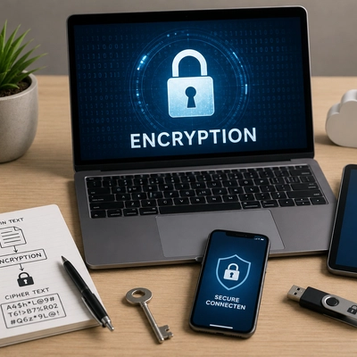
Every time you log into an account, make an online purchase, or send a private message, your information may be protected using encryption.
Encryption converts readable information into coded data while it’s traveling across the internet, making it much more difficult for unauthorized parties to access it. That’s one reason many websites use secure connections, often indicated by “HTTPS” and a padlock icon in your browser.
While no system is completely immune to cyber threats, encryption and other security technologies help make everyday internet use much safer.
The internet may seem mysterious, but its basic principle is straightforward: devices around the world communicate by sending small pieces of information across a vast network. Every website you visit, video you stream, and message you send depends on computers working together through shared communication standards. Understanding how the internet works not only makes the technology less intimidating but also helps you appreciate the remarkable system that connects billions of people and devices every single day.