
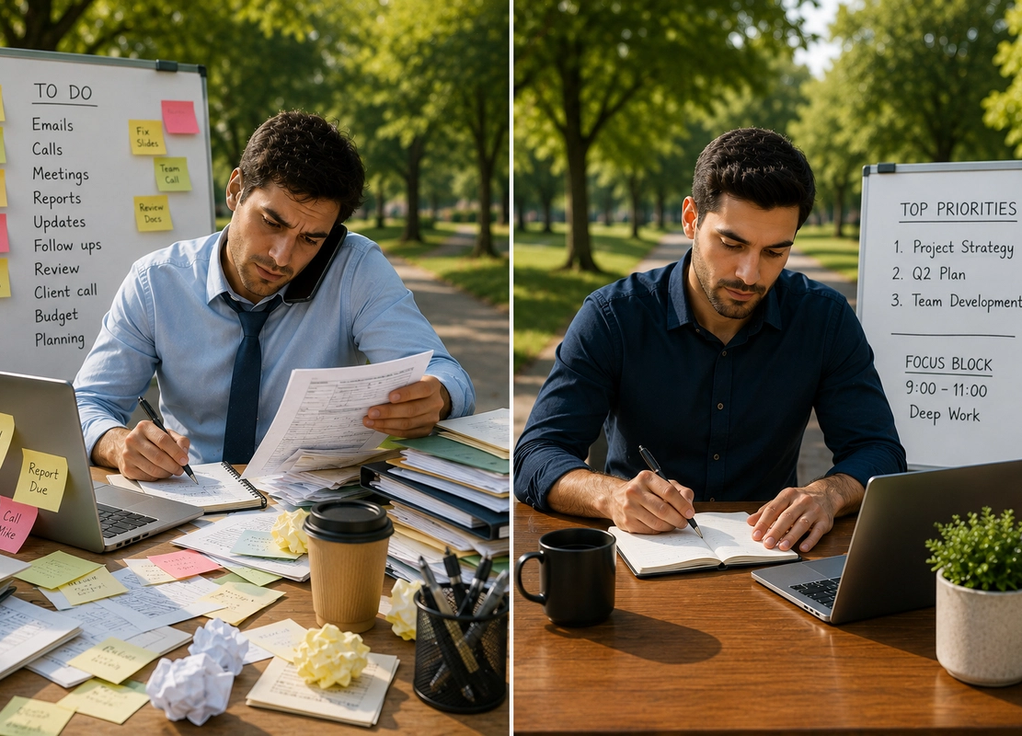
The Real Difference Between Being Busy and Being Effective
Jolene Nolan
July 25, 2026
Being busy is often seen as a sign of success. Full calendars, overflowing inboxes, and long to-do lists can make us feel productive, and in many workplaces, constant activity is almost worn as a badge of honor. But being busy and being effective are not the same thing.
It’s entirely possible to spend an entire day working without making meaningful progress. Effectiveness isn’t about how many tasks you complete—it’s about whether your time and energy are moving you closer to the outcomes that matter most.
Busy people fill their schedules
A busy day is packed with meetings, emails, notifications, and small tasks that demand immediate attention. By the end of the day, it can feel like you’ve accomplished a great deal simply because you’ve been active from morning until evening.
The problem is that activity doesn’t always equal progress.
Checking off dozens of small tasks may create a sense of accomplishment, but if none of them contribute to your biggest priorities, you’ve simply stayed occupied rather than moved forward.
Effective people prioritize what matters
People who are effective don’t try to do everything.
Instead, they identify the tasks that will have the greatest impact and focus on those first. They understand that some activities create far more value than others, even if they require more concentration or take longer to complete.
Progress often comes from doing a few important things exceptionally well, not from doing everything at once.
Knowing what to ignore can be just as valuable as knowing what to pursue.
Effectiveness requires focus
Modern life is full of distractions. Emails, messages, social media, and constant notifications make it easy to switch between tasks dozens of times each day.
While multitasking may feel productive, it often reduces the quality of our work and increases the time it takes to complete important projects. Effective people create periods of uninterrupted focus where they can think deeply and solve meaningful problems.
Attention is one of the most valuable resources you have.
Where you direct it determines the quality of your results.
They measure outcomes, not effort
Working long hours doesn’t automatically produce better results.
Effective people ask a different question: “What did this work actually achieve?” Instead of measuring success by the amount of time spent working, they evaluate whether their efforts produced meaningful progress.
Sometimes a well-planned hour accomplishes more than an entire day of scattered activity.
Results matter more than appearances.
They know when to slow down
Constant busyness often leads to fatigue, rushed decisions, and burnout.
Effective people understand that rest isn’t wasted time—it’s part of performing well over the long term. Taking breaks, getting enough sleep, and stepping away from work occasionally improve focus, creativity, and decision-making.
Sustainable performance comes from balancing effort with recovery.
You can’t consistently do your best if you’re constantly running on empty.
They say no to protect their priorities
Every commitment comes with an opportunity cost.
People who are effective recognize that saying yes to one request often means saying no to something else. Rather than accepting every meeting, project, or obligation, they carefully choose where to invest their time.
Protecting your schedule allows you to give your best attention to the work that matters most.
Not every opportunity deserves an immediate yes.
Being busy can make you feel productive, but effectiveness is measured by meaningful results, not constant activity. The people who accomplish the most aren’t necessarily the ones working the longest hours—they’re often the ones who prioritize wisely, focus deeply, measure outcomes instead of effort, make time to recover, and protect their attention from unnecessary distractions. In the end, success isn’t about filling every hour of the day. It’s about making the hours you have count.