Why the World Feels Faster Than Ever (And What to Do About It)
Elora Mueller
July 25, 2026
Many people have the same feeling: life seems to be moving faster than it used to. News breaks around the clock, messages arrive instantly, trends appear and disappear within days, and there never seems to be enough time to keep up. Even when technology saves us time, it often feels like we’re busier than ever.
The pace of modern life hasn’t just changed because the clock moves faster—it has changed because the amount of information, choices, and expectations competing for our attention has grown dramatically. Understanding why the world feels so fast can help us slow down in ways that actually matter.
We’re exposed to more information than ever
Not long ago, people received most of their news from a newspaper, television broadcast, or a few conversations each day.
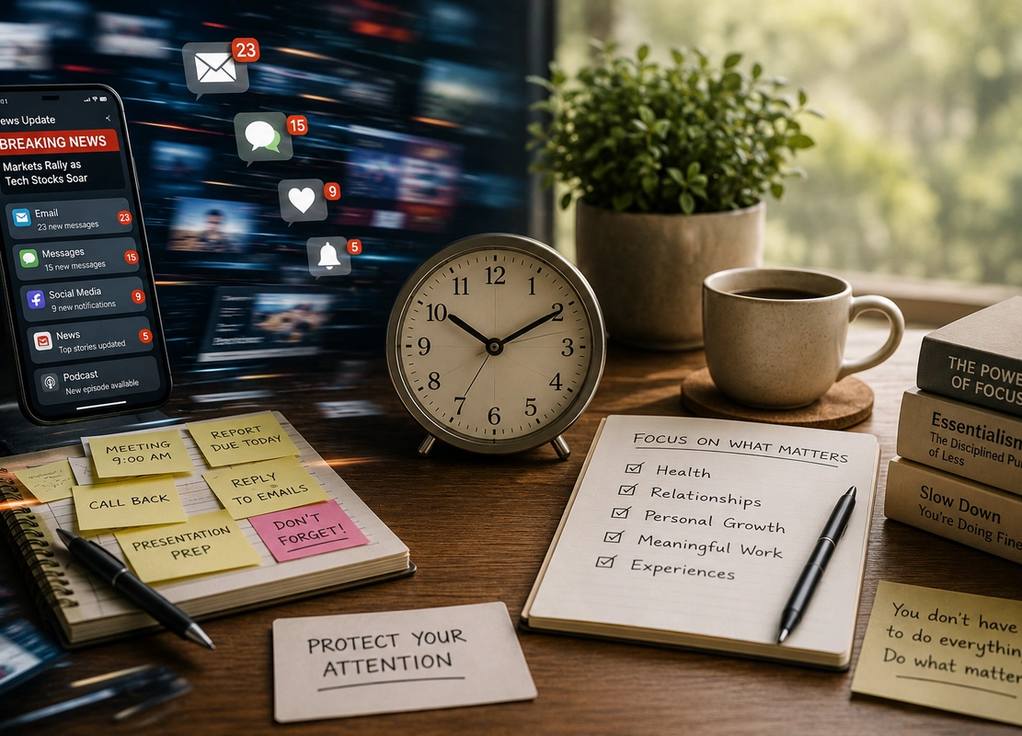
Today, smartphones deliver a constant stream of headlines, emails, messages, videos, podcasts, and social media updates. Every time we unlock our devices, we’re exposed to new information that demands our attention.
Our brains haven’t evolved to process an endless flow of content.
It’s not surprising that life feels faster when so much is happening all at once.
Technology has raised expectations
Technology has made communication incredibly efficient.
The downside is that many people now expect immediate replies, faster decisions, and constant availability. Emails replace letters, instant messages replace phone calls, and work can follow us long after we’ve left the office.
Convenience has made many tasks quicker, but it has also increased the number of things we try to fit into a single day.
Saving time doesn’t always mean feeling less busy.
There’s always something new
The internet rarely pauses.
A trending story today may be forgotten tomorrow. New products launch constantly, entertainment is released every week, and social media feeds refresh endlessly with new content.
Because there’s always something happening, it can feel like we’re falling behind if we aren’t paying attention.
In reality, no one can keep up with everything.
Trying to do so often creates unnecessary stress.
Constant comparison adds pressure
Social media allows us to see thousands of people’s achievements, vacations, careers, and milestones every day.
Even when we know these snapshots don’t represent complete lives, it’s easy to feel like everyone else is moving faster or accomplishing more.
Comparison creates the illusion that we’re behind, even when we’re making steady progress in our own lives.
Life isn’t a race with strangers on the internet.
Everyone moves at a different pace.
Slow moments have become more valuable
Ironically, as life becomes busier, quiet moments become even more important.
Reading a book without interruptions, taking a walk, cooking a meal, spending time with loved ones, or simply sitting without checking your phone gives your mind an opportunity to rest and process.
Slowing down isn’t about avoiding responsibility.
It’s about creating space to think, recover, and enjoy the present instead of constantly rushing toward the next task.
Focus on what truly matters
You don’t need to consume every headline, follow every trend, or respond to every notification immediately.
Choosing where to invest your attention is one of the most powerful ways to reduce the feeling of constant acceleration. Setting boundaries with technology, prioritizing meaningful relationships, focusing on a few important goals, and accepting that you can’t do everything can make everyday life feel far more manageable.
A slower life often begins with more intentional choices, not fewer opportunities.
You don’t have to match the world’s pace to live a fulfilling life.
The world feels faster than ever because we’re surrounded by more information, greater expectations, endless choices, and constant digital connection. While we can’t slow the pace of technology or culture, we can decide how we respond to it. By protecting our attention, reducing unnecessary distractions, embracing quiet moments, and focusing on what matters most, we create a healthier relationship with a fast-moving world. In the end, living well isn’t about keeping up with everything—it’s about making sure the things you give your time and attention to are truly worth it.