How Encryption Keeps Your Data Safe
Rex Brandt
July 24, 2026
Every day, you send messages, shop online, log into accounts, and store photos or documents in the cloud. Behind the scenes, one technology plays a crucial role in protecting that information: encryption.
Although the word may sound highly technical, the basic idea is surprisingly simple. Encryption converts readable information into coded data that can only be understood by someone with the correct key. It’s one of the most important tools for protecting privacy and securing digital communication in the modern world.
What is encryption?
Imagine writing a letter in a secret code that only you and the recipient can understand.
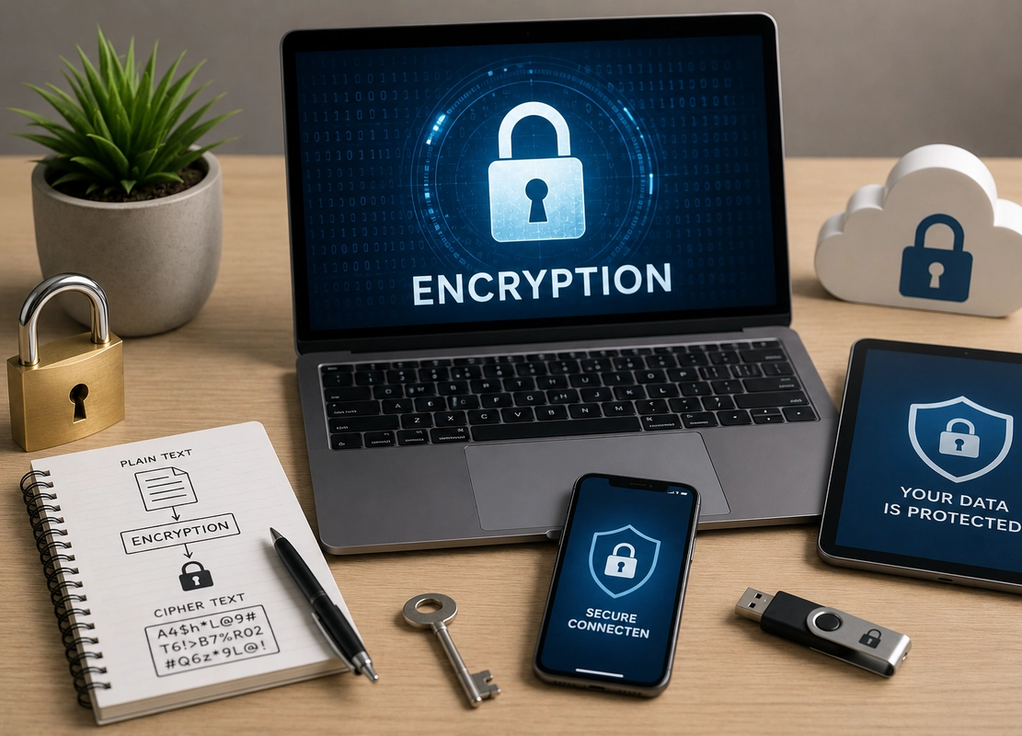
If someone else intercepted the letter, they would see only a collection of meaningless symbols. Encryption works in a similar way. It transforms readable information, known as plaintext, into scrambled data called ciphertext.
Only someone with the correct digital key can convert that scrambled information back into its original form.
Without the key, the data is effectively unreadable.
When encryption is used
Most people rely on encryption many times every day without realizing it.
When you log into your online banking account, send a message through a secure app, make a purchase on a shopping website, or back up files to cloud storage, encryption is often protecting your information while it’s being transmitted or stored.
Many messaging apps also use end-to-end encryption, meaning only the people participating in the conversation can read the messages. Even the service provider may not be able to view the contents.
Encryption has become a standard part of everyday internet use.
Why encryption matters
Without encryption, sensitive information could be much easier for attackers to intercept.
Passwords, financial information, personal messages, medical records, business documents, and other private data often travel across networks that connect millions of devices around the world. Encryption helps prevent unauthorized parties from reading that information if it is intercepted during transmission or accessed without permission.
While no security measure is perfect, encryption significantly reduces the risk of exposing confidential information.
It’s one of the foundations of modern cybersecurity.
How websites use encryption
You may have noticed that many website addresses begin with “HTTPS” instead of “HTTP.”
The “S” stands for “secure” and indicates that the connection between your browser and the website is encrypted. Many browsers also display a padlock icon next to the website address to show that the connection is protected.
This encryption helps keep information such as passwords, payment details, and personal data safer while traveling between your device and the website’s servers.
Whenever you’re entering sensitive information online, checking for a secure connection is a good habit.
Encryption isn’t just for businesses
Some people assume encryption only matters for banks, governments, or large companies.
In reality, everyone benefits from it. Personal photos, emails, financial records, tax documents, and private conversations all deserve protection. As more aspects of daily life move online, encryption plays an increasingly important role in safeguarding personal information.
Whether you’re using a smartphone, laptop, or tablet, encryption is quietly helping protect your digital life.
Most modern devices even offer full-device encryption, which helps secure your data if the device is lost or stolen.
Good security goes beyond encryption
Encryption is powerful, but it’s only one part of staying safe online.
Weak passwords, phishing attacks, malware, and stolen devices can still put your information at risk. That’s why it’s important to combine encryption with other good security habits, such as using strong, unique passwords, enabling two-factor authentication, keeping your software updated, and being cautious about suspicious emails or links.
Strong cybersecurity comes from multiple layers of protection working together.
Encryption is one of the most important layers, but it works best alongside smart digital habits.
Encryption helps make the modern internet possible by protecting the information we send, receive, and store every day. It transforms readable data into coded information that can only be accessed with the correct key, helping secure everything from online banking and shopping to messaging and cloud storage. While most people rarely notice it working in the background, encryption is one of the reasons we can confidently use digital services in our daily lives. Understanding how it works makes it easier to appreciate the technology that helps keep our personal information safe in an increasingly connected world.