
How to Live Below Your Means Without Feeling Deprived
Jolene Nolan
July 24, 2026
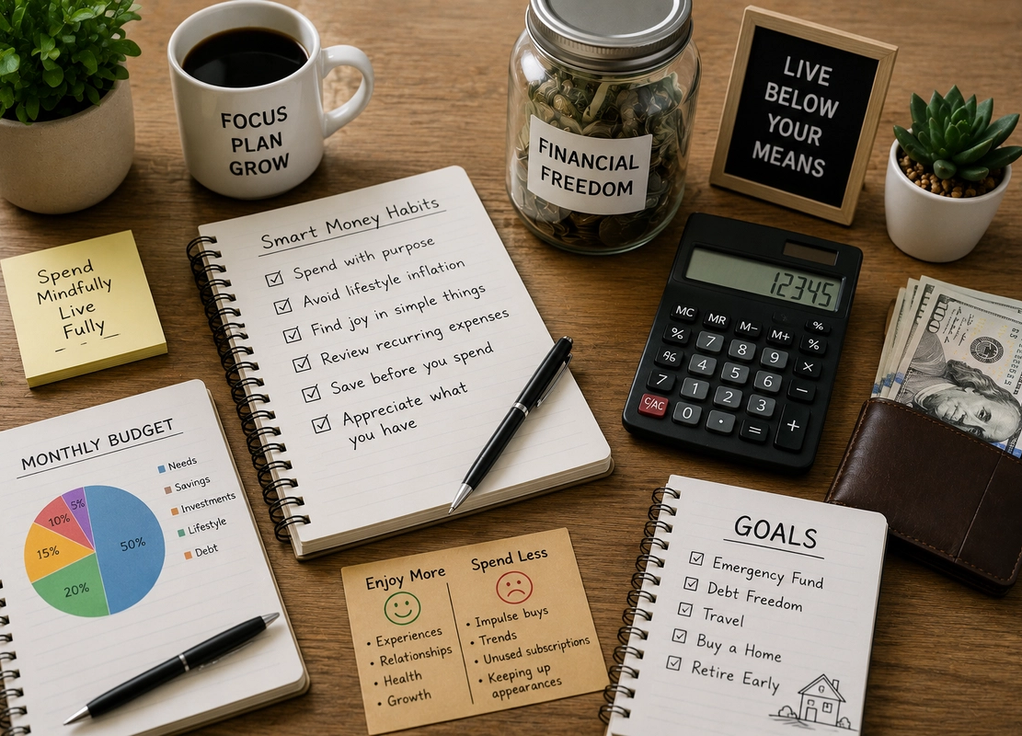
Living below your means is one of the most effective ways to build financial security, yet it’s often misunderstood. Many people picture extreme frugality, cutting out everything enjoyable, or constantly saying no to themselves. In reality, it’s less about deprivation and more about spending intentionally.
When your expenses are lower than your income, you create room to save, invest, handle unexpected costs, and pursue opportunities without relying on debt. The goal isn’t to spend as little as possible—it’s to make sure your money supports the life you actually want.
Spend with purpose
Living below your means doesn’t require eliminating every luxury.
Instead, focus on spending money on the things that genuinely improve your life while cutting back on purchases that add little long-term value. You might happily pay for travel, books, or fitness because those align with your priorities, while spending less on impulse purchases or trends that quickly lose their appeal.
Knowing what matters most makes it easier to say no to the things that don’t.
Intentional spending feels very different from forced sacrifice.
Avoid lifestyle inflation
As income increases, it’s natural to want a nicer home, a newer car, or more expensive habits.
The problem is that if your spending rises every time your income does, you may never feel financially comfortable no matter how much you earn. Instead of automatically upgrading your lifestyle, consider directing part of every raise toward savings, investments, or paying off debt.
Allow your financial security to grow alongside your income—not just your expenses.
Small choices today can create much greater freedom in the future.
Find satisfaction outside of spending
Many of life’s most meaningful experiences cost very little.
Spending time with family and friends, walking in nature, cooking at home, reading, exercising, learning a new skill, or exploring your local community can be just as rewarding as expensive entertainment.
When enjoyment isn’t tied to constant spending, saving money becomes much easier.
A rich life isn’t always the same as an expensive one.
Be mindful of recurring expenses
It’s often the small monthly costs—not the occasional splurges—that quietly strain a budget.
Subscription services, memberships, premium apps, and automatic renewals can add up over time. Reviewing these recurring expenses every few months helps ensure you’re paying only for services you genuinely use.
Reducing unnecessary monthly payments can free up money without making you feel like you’re giving up much at all.
Sometimes the easiest savings come from expenses you’ve stopped noticing.
Save before you spend
One of the simplest ways to live below your means is to treat saving as a regular expense rather than something left over at the end of the month.
Setting up automatic transfers to a savings or investment account helps you build financial stability without relying on willpower. You naturally learn to manage the money that’s available instead of spending everything first.
Paying yourself first makes saving a habit instead of an afterthought.
Consistency matters more than the amount you start with.
Appreciate what you already have
It’s easy to feel like you always need something newer or better, especially when advertisements and social media constantly encourage more consumption.
Taking time to appreciate what you already own can reduce the urge to make unnecessary purchases. Before buying something new, ask yourself whether it solves a real problem or simply satisfies a temporary impulse.
Contentment is often one of the most valuable financial habits you can develop.
Wanting less can sometimes create more freedom than earning more.
Living below your means isn’t about denying yourself every pleasure—it’s about making thoughtful decisions that align with your long-term goals. By spending intentionally, avoiding lifestyle inflation, finding enjoyment beyond shopping, reviewing recurring expenses, saving consistently, and appreciating what you already have, you can build financial security without feeling restricted. Over time, these habits create something far more valuable than a larger paycheck alone: greater flexibility, reduced financial stress, and the freedom to make choices based on what matters most to you.